
The architecture determines compatibility
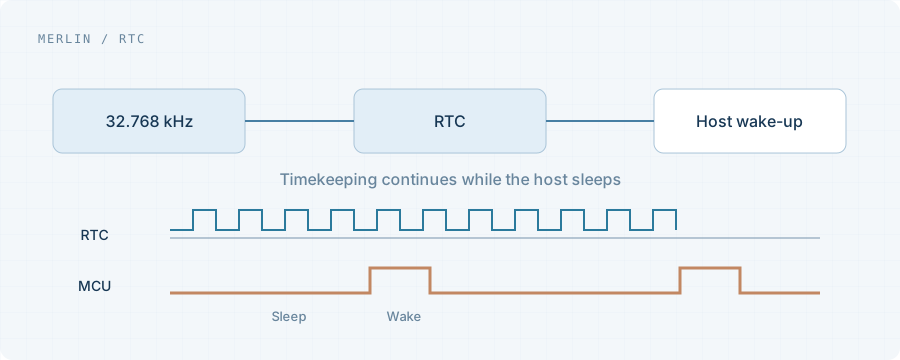
A passive crystal needs a host oscillator circuit. An active oscillator supplies a clock, while an RTC module adds timekeeping, interfaces and backup-power functions. Identify the host input architecture before treating these as alternatives.
Room-temperature accuracy is not full-range accuracy
Tuning-fork crystal temperature behavior affects timekeeping in changing environments. For a defined full-range target, compare compensated clock or RTC architectures alongside current, calibration, start-up and supply conditions.
Review the operating profile
Operating current alone does not describe battery use. Include main and backup modes, sleep duty cycle, clock-output behavior and external circuitry. Estimate battery life from a measured operating profile.
Validation plan
Measure accumulated timing error across temperatures, power interruption and recovery, backup switching and extended operation. Include the host, interface, supplies, temperature range, power budget and time-error target in the inquiry.
Project checklist
- Crystal port or external clock input
- Main and backup supply
- Temperature and time-error target
- Interface, output and power budget