
MEMS oscillators
Evaluate MEMS timing by part and application, including frequency, output, environmental needs and configuration.
Make the key requirements clear.
MEMS oscillators combine a micro-electromechanical resonator with circuitry to generate a clock. Programming, power, jitter and temperature ratings vary between devices, so evaluate each candidate against the application.
Package concept, not the outline or marking of a specific part.
Selection routes
These routes help define the inquiry; not every frequency, size or performance combination is available.
General clock outputs
LVCMOS / differential, confirmed by part
Programmable options
Series-specific frequency, interface & configuration
Specified-part inquiry
Share the complete ordering code
Parameters to review before inquiry.
| Parameter | Information to specify |
|---|---|
| Ordering code & configuration | Frequency, output, voltage, temperature and options |
| Dynamic performance | Compare jitter at the specified integration bandwidth |
| Environment & power | Temperature, vibration needs, start-up and operating current |
| Replacement assessment | Pinout, interface, frequency error and system validation |
Application discussions
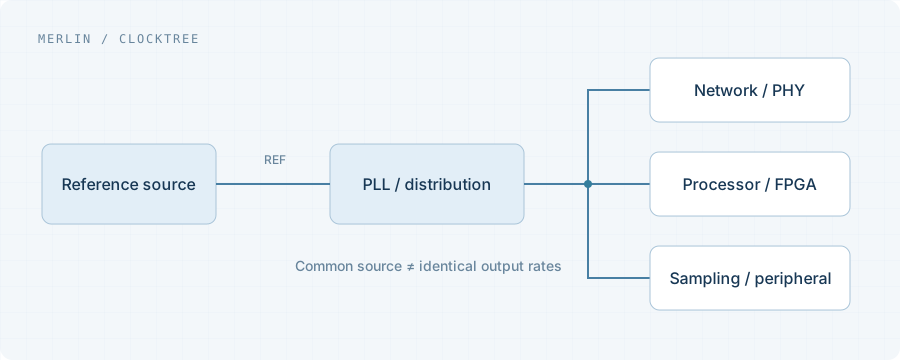
Networking / industrial electronics / clock distribution / special frequencies
These are selection topics; suitability depends on the part and application validation.
Can MEMS replace quartz timing without validation?
The technology alone does not establish compatibility. Review interfaces, noise, timing, the error budget and environment, then validate in the target system.
Read technical resources ↗