Selection reference · illustrative scenario
Define the measurement task
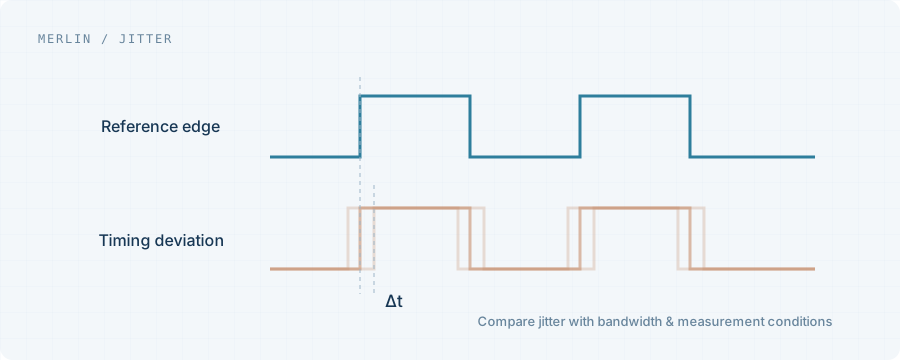
Counting, sampling, calibration and long-term references prioritize different clock behavior. Define error budget, accuracy after warm-up, noise offsets and calibration strategy before selecting device-level limits.
Engineering: distinguish short and long term
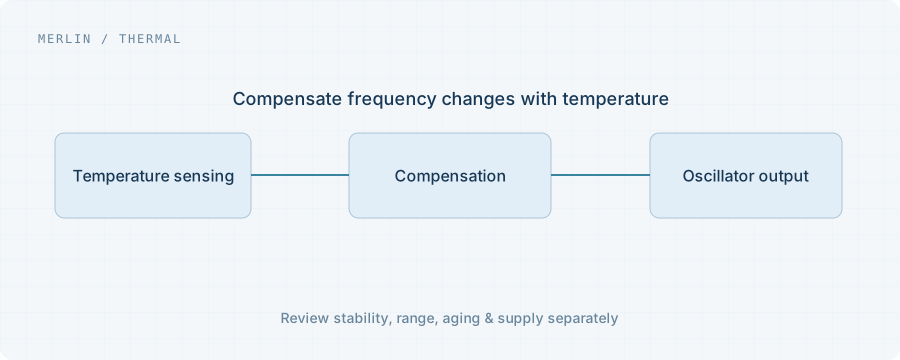
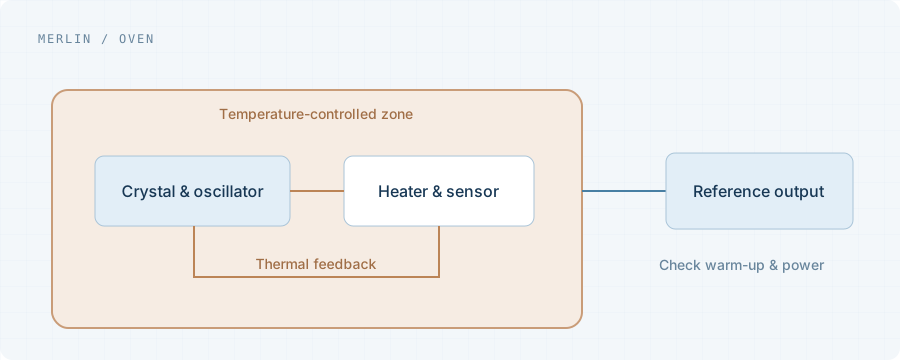
Low phase noise does not establish low aging, and temperature stability is not total accuracy. Compare OCXO warm-up, power and thermal design with alternative routes such as TCXO.
Procurement: define acceptance conditions
Include measurement conditions, aging period, temperature and acceptance method. Confirm the availability and scope of reports before treating a promotional specification as an agreed purchasing limit.
Scenario: accuracy is inadequate immediately after power-up
Compare the system start-up target with the device warm-up definition, then log temperature, supply and frequency over time. If warm-up is incompatible, revisit the architecture rather than assuming a tighter grade solves the issue.
Inquiry & validation checklist
- Measurement goal and error budget
- Warm-up and steady power
- Aging, noise and calibration period
- Report scope and acceptance method